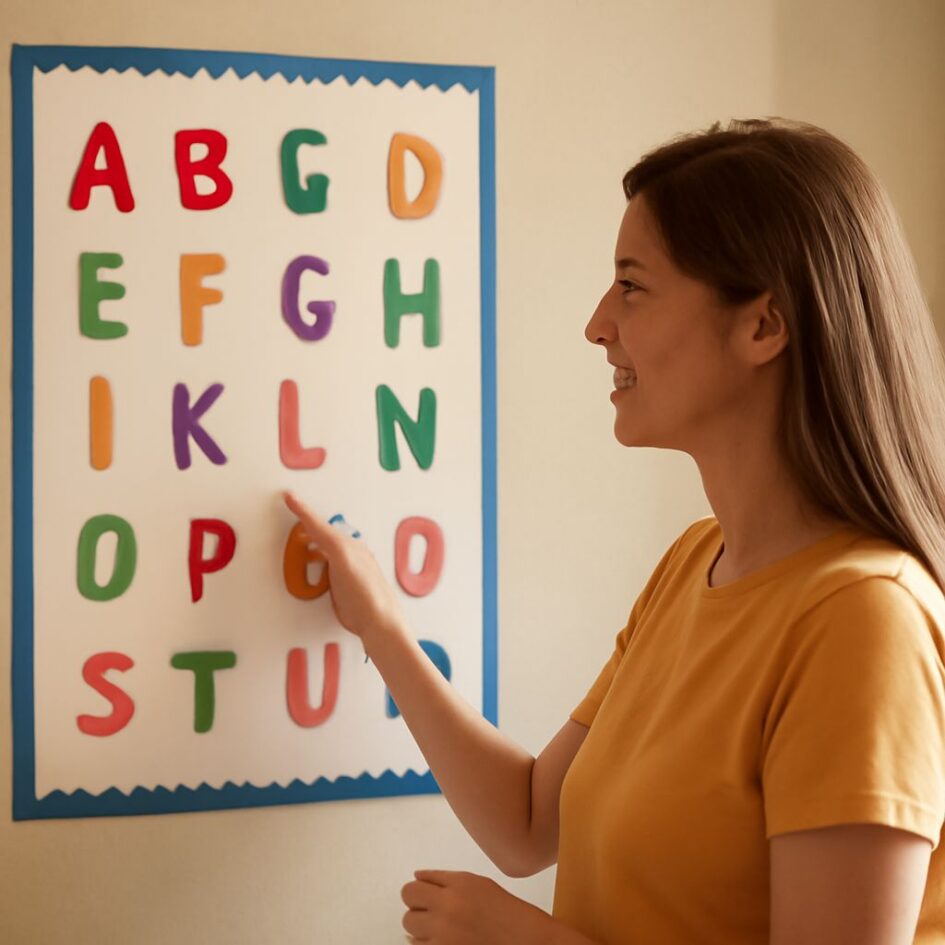
Learning the Spanish alphabet is an essential step in mastering the language. Understanding how each letter is pronounced will improve both speaking and listening skills, which are crucial for effective communication. This article focuses on the Spanish alphabet with pronunciation guidance, highlighting common challenges and providing tips to enhance your language proficiency.
Introduction to the Spanish alphabet
The Spanish alphabet consists of 27 letters, similar to the English alphabet but with the addition of the letter “ñ.” While most letters have similar names to their English counterparts, their pronunciation is distinct. Becoming familiar with these differences is vital for anyone learning Spanish.
Pronunciation of each Spanish letter
Here’s how each letter of the Spanish alphabet is pronounced:
- A – Pronounced as “ah” like in “father.”
- B – Sounds like “beh,” similar to the English “b.”
- C – Pronounced “seh” before “e” or “i” and “kah” before other vowels.
- D – Sounds like “deh,” softer than the English “d.”
- E – Pronounced “eh” as in “bet.”
- F – Sounds like “eh-feh.”
- G – Pronounced “heh” before “e” or “i” and “geh” before other vowels.
- H – Silent in all positions.
- I – Pronounced “ee” as in “see.”
- J – Sounds like “hoh-tah,” similar to the English “h.”
- K – Pronounced “kah,” used mainly in foreign words.
- L – Sounds like “eh-leh.”
- M – Pronounced “eh-meh.”
- N – Sounds like “eh-neh.”
- Ñ – Pronounced “en-yeh,” unique to Spanish.
- O – Pronounced “oh” as in “more.”
- P – Sounds like “peh.”
- Q – Pronounced “koo,” always followed by “u.”
- R – Sounds like “eh-reh,” trilled at the start of words or after “n” and “l.”
- S – Pronounced “eh-seh.”
- T – Sounds like “teh,” similar to the English “t.”
- U – Pronounced “oo” as in “food.”
- V – Sounds like “beh,” similar to “b.”
- W – Pronounced “dob-leh oo,” mainly in foreign words.
- X – Sounds like “eh-kees,” pronounced as “ks” or “s” in different words.
- Y – Pronounced “ee-gri-eh-ga,” sounds like “ee” in many words.
- Z – Sounds like “seh-tah,” similar to “s.”
Common pronunciation challenges
One of the primary challenges with Spanish letter pronunciation is differentiating similar sounds. For instance, the letters “b” and “v” are often pronounced similarly, which can lead to confusion. Additionally, the trilled “r” can be difficult for non-native speakers.
The silent “h” and the use of “ñ” also pose challenges for learners unfamiliar with these conventions. Exposure and practice are key to overcoming these hurdles.
Tips for mastering Spanish pronunciation
To master Spanish pronunciation, consistent practice and immersion are crucial. Here are some effective strategies:
- Listen actively: Engage with Spanish audio resources like music, podcasts, or films to hear authentic pronunciation.
- Speak aloud: Regularly practice speaking, focusing on difficult sounds and using repetition to reinforce correct pronunciation.
- Use language apps: Leverage language learning apps that offer pronunciation feedback and exercises.
- Engage with native speakers: Conversations with native speakers provide real-world pronunciation practice and immediate feedback.
By incorporating these practices, learners can enhance their understanding of the Spanish alphabet with pronunciation and achieve greater fluency in the language.