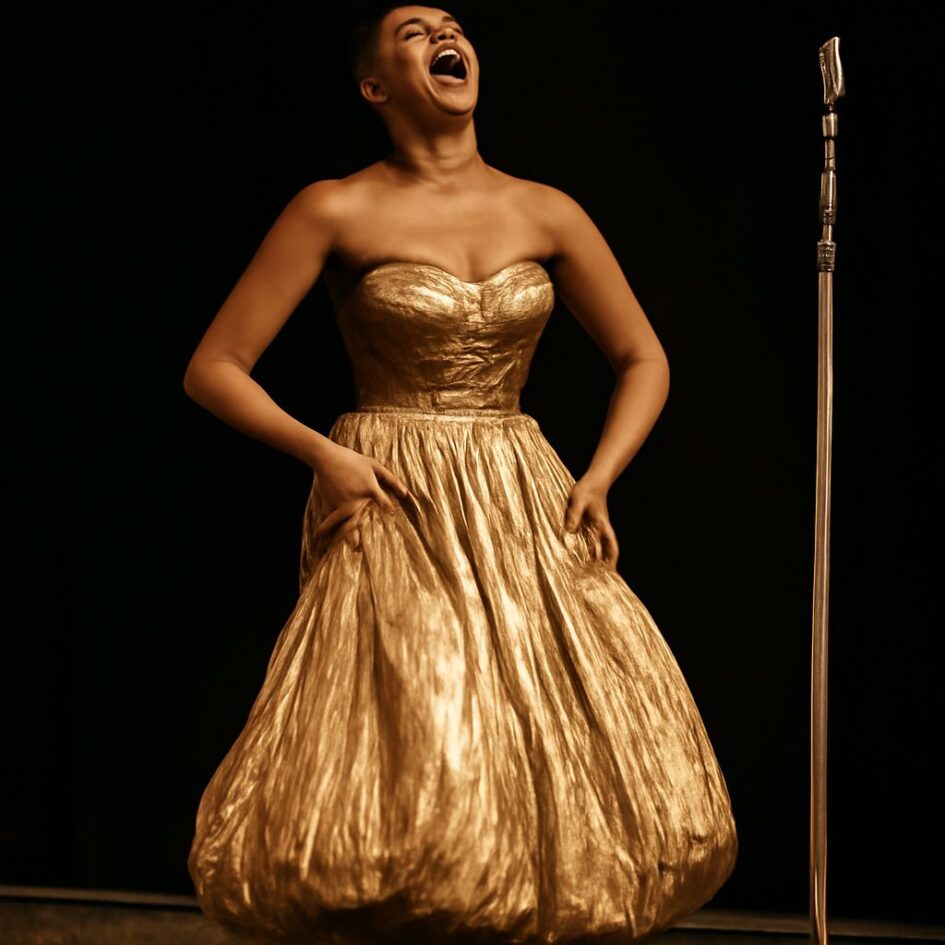
In 1925, a young dancer from St. Louis stepped onto a Paris stage in La Revue nègre. The performer known as Baker became a sensation, but the famous banana skirt associated with her belonged to a later Folies Bergère revue. Her public life would also include marriage and family, work for the French Resistance, and a place in the American civil rights movement.
Those chapters help answer a question a single photograph cannot: how did a Black American entertainer become an international star and use her public standing? The answer begins with performance, but it also follows her through war, family life, and the struggle against segregation.
From St. Louis to the Paris stage
Born in St. Louis in 1906, Baker began performing in the United States before finding international fame in France. Columbia University Libraries traces her path through touring companies and Broadway to La Revue nègre in Paris. Its all-Black cast brought American performance traditions to a European audience eager for jazz and new forms of dance.
Who is Josephine Baker to a reader encountering that history for the first time? She was a dancer, singer, and actress who made a career across several decades and countries. A performance depended on her timing, physical expression, and command of an audience, as well as the music, costumes, and theatrical setting around her.
Josephine Baker, 1920s Paris performer and later film star, worked in a city where fascination with Black culture existed alongside racial stereotypes. The Metropolitan Museum of Art places her performances within a French enthusiasm for American jazz and describes how she worked with imagery that white European audiences associated with Blackness. Her success and the stereotypes used to market it are both part of the historical record.
The title of La Revue nègre contains a French racial term that is offensive today. Naming it accurately helps identify the production and the language in which its performers were advertised. It also prompts a reader to ask who designed and sold the image and how the performer acted within that setting.
The banana costume in context
The banana skirt was associated with a later Folies Bergère performance, La Folie du jour, in 1926, rather than her 1925 Paris debut. The French dance archive Numeridanse identifies a surviving sequence from the Folies Bergère revue and places it in the mid-1920s. The distinction matters because images of different shows and later recreations can circulate with the same short caption.
Photographs of Josephine Baker, banana costume included, record a theatrical image at a particular time. A still can show a pose and costume; it cannot reproduce the rhythm of a dance or the response of an audience. A moving image, when its date and provenance are known, can add evidence about gesture and pace. Even then, a camera selects a viewpoint, and an edited film may present a performance differently from the way spectators saw it in the theater. Nor can it establish that every similar outfit in a later photograph came from the first production. A reader can look for the photographer, date, venue, and production in a museum or archive caption before attaching a story to an image.
The costume drew on a European appetite for imagined exoticism. That context does not erase Baker’s artistry or the choices she made onstage. It makes the relationship between performance and audience more complicated: the same image could bring a performer recognition while also drawing on ideas that reduced Black people to caricatures. The Met’s interpretation offers one way to examine how she turned familiar stereotypes into material for her own performance.
Josephine Baker spouse and family in the historical record
Baker married more than once. Josephine Baker, spouse of businessman Jean Lion, became a French citizen in 1937, as the Berlin Museum explains. The same museum describes her family with musician Jo Bouillon, with whom she adopted twelve children from different parts of the world.
The marriages belong to a life lived across national borders, but a photograph of a couple is a limited source. It can establish that two people appeared together at a particular event if its caption is reliable; it cannot disclose the private terms of their relationship. Names, dates, and the nature of a relationship should come from biographical or archival evidence rather than a viewer’s interpretation of a gesture.
The performer and her husband Bouillon also made their family part of a public vision of people of different backgrounds living together. That public project can be described without treating the children as symbols instead of individuals. Their lives, like hers, extended beyond the image presented to an audience.
Resistance and civil rights
During World War II, Baker assisted the French Resistance while continuing her work as an entertainer. The National Park Service describes her wartime role and her later support for civil rights in the United States. Her ability to travel and her public position became part of a life that reached beyond the stage, though the details of individual missions should be checked against reliable records rather than embellished.
Back in the United States, the artist used her reputation to challenge segregation. She spoke at the 1963 March on Washington, an event that brought demands for jobs and freedom to the national capital. Her participation links her story to a movement made by many organizers, speakers, and communities over years of work.
That history also changes how an audience might read the familiar photographs. They document a talented performer at a moment of fame; they do not contain her entire political life. Likewise, remembering her wartime service and activism need not make her stage work a mere prelude. Each part of the record reveals a different setting in which she acted and made choices. Read together, those records show a public figure whose work moved between entertainment and civic life over many years.
Reading the photograph again
When an image of the dancer appears online, begin with its caption: identify the production, the date, and whether the picture is an original photograph or a later restaging. Then place it alongside a recording, a museum biography, and an account of her public work. The costume becomes one piece of evidence about a performer whose career and commitments extended well beyond a single Paris stage.