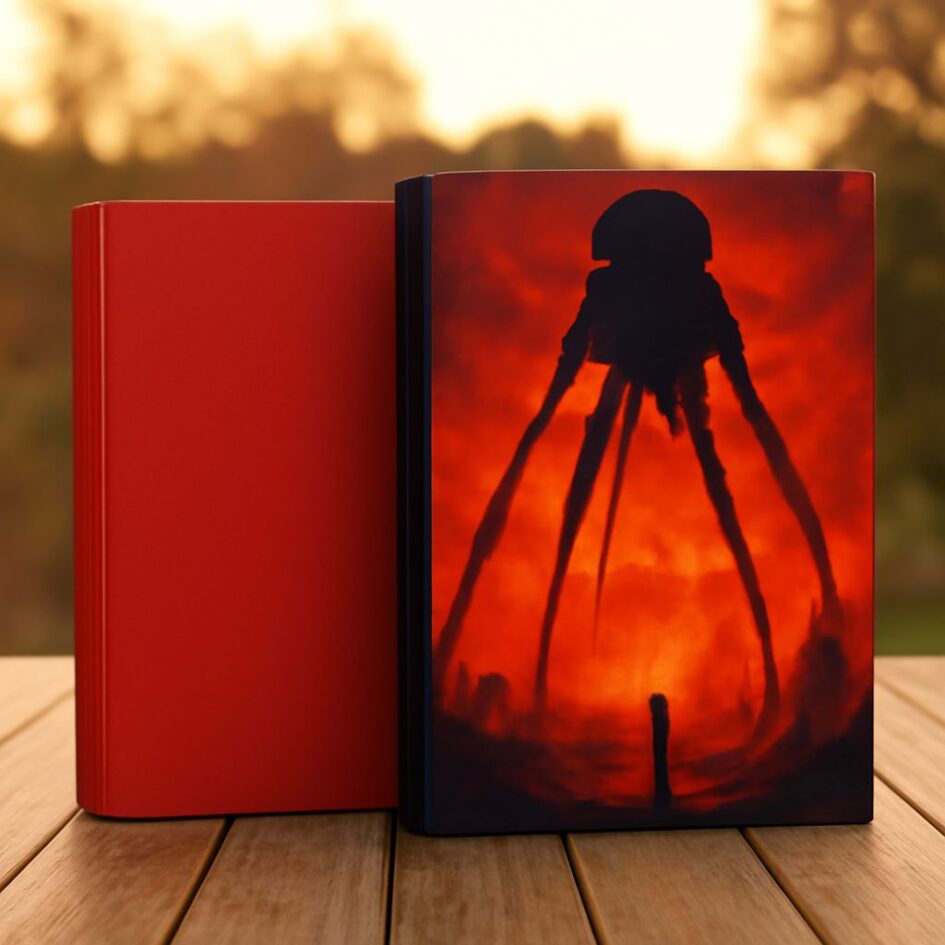
H.G. Wells’ “War of the Worlds” stands as a seminal piece in science fiction literature. Known for its gripping narrative and exploration of human vulnerability, it has captivated readers for over a century. This article delves into the origins, themes, and enduring impact of this iconic novel, offering insights into its creation and its place in literary history.
Introduction to ‘War of the Worlds’
“War of the Worlds” is a novel by H.G. Wells that tells the story of a Martian invasion of Earth. It is celebrated for its vivid depiction of alien life and the chaos that ensues on Earth as mankind confronts the unknown. This work is often noted for its early use of scientific ideas and its innovative narrative style, which helped to define the science fiction genre.
When was ‘War of the Worlds’ written?
The “War of the Worlds” book was written by H.G. Wells in 1897 and first published in 1898. Its publication marked a pivotal moment in science fiction, providing readers with a thrilling narrative that combined imaginative speculation with societal commentary. The novel quickly garnered attention for its unique premise and engaging storytelling.
Themes and impact of the novel
One of the central themes of “War of the Worlds” is the fear of the unknown and the potential for catastrophe when humanity encounters otherworldly forces. The novel explores the fragility of human civilization in the face of advanced alien technology. This theme resonates with readers, reflecting contemporary anxieties about technological advancements and their potential consequences.
Additionally, the book addresses issues of colonialism and imperialism, drawing parallels between the Martian invasion and the historical colonization of less technologically advanced societies. By turning the tables and making humans the subject of invasion, Wells invites readers to consider the ethical implications of imperialism.
The impact of “War of the Worlds” extends beyond its literary achievements. It has inspired numerous adaptations, including films, radio dramas, and television series, each offering a new interpretation of Wells’ vision. Its ability to adapt to various media underscores its timeless appeal and relevance.
H.G. Wells’ influence on science fiction
H.G. Wells’ contribution to science fiction is immeasurable. Through “War of the Worlds,” he laid the groundwork for future explorations of alien encounters and space travel in literature. Wells’ ability to weave scientific concepts with speculative fiction has influenced countless authors and filmmakers, establishing science fiction as a respected literary genre.
Wells’ work also encouraged readers and writers to think critically about the implications of science and technology, fostering a genre that explores not just fantastical possibilities but also philosophical and ethical questions. His influence is evident in the works of later science fiction giants, such as Arthur C. Clarke and Isaac Asimov, who continued to push the boundaries of the genre.