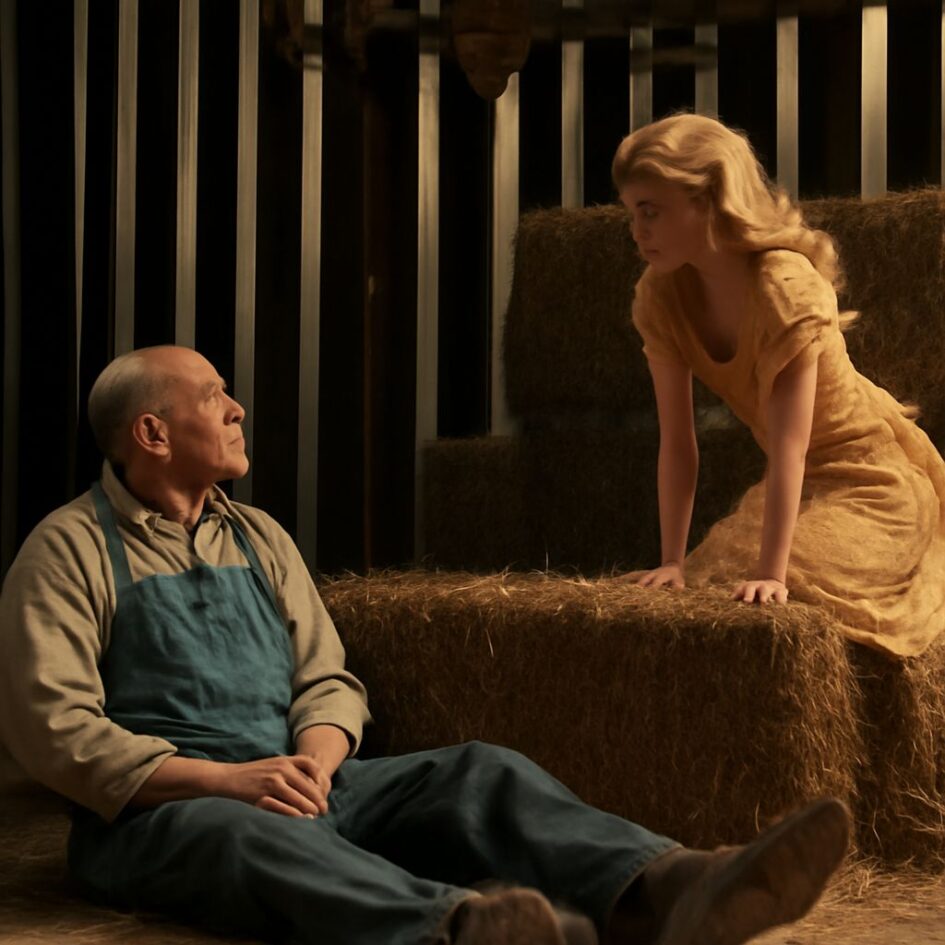
In John Steinbeck’s novella “Of Mice and Men,” Curley’s Wife emerges as a complex character embodying themes of loneliness and unfulfilled dreams. Despite not having a personal name, she plays a pivotal role in the narrative, providing insight into the lives of women during the Great Depression. This analysis delves into her role within the story, the symbolism she carries, and how media has shaped perceptions of her character.
The role of Curley’s Wife in the narrative
Curley’s Wife is introduced as the only prominent female character in “Of Mice and Men,” and her presence significantly impacts the lives of the male characters. She is often seen seeking attention from the men on the ranch, driven by her isolation and longing for human connection. Her interactions with Lennie, George, and the others reveal her deep-seated loneliness and desire for recognition.
Beyond her personal struggles, Curley’s Wife serves as a catalyst for the novella’s tragic climax. Her encounter with Lennie highlights her vulnerability and sets in motion the events leading to the story’s conclusion. Through her character, Steinbeck explores the themes of powerlessness and the consequences of isolation.
Symbolism and themes associated with Curley’s Wife
Curley’s Wife symbolizes the role of women during the era, trapped in a patriarchal society with limited opportunities. Her namelessness reflects her lack of identity and autonomy, often being referred to only in relation to her husband. This anonymity underscores her status as property rather than an individual with her own dreams and aspirations.
Additionally, Curley’s Wife embodies the theme of broken dreams. She frequently reminisces about her lost opportunity to become a movie star, which serves as a poignant reminder of the shattered dreams shared by many characters in the novella. Her unfulfilled ambitions mirror the broader disillusionment experienced by people during the Great Depression.
Media framing and perception of Curley’s Wife
The portrayal of Curley’s Wife has evolved over time, shaped by various media adaptations and scholarly interpretations. In some portrayals, she is depicted as a femme fatale, while others emphasize her vulnerability and tragic circumstances. These different interpretations influence how audiences perceive her character, often focusing on either her manipulative tendencies or her plight as a misunderstood woman.
Critics argue that media adaptations have sometimes oversimplified Curley’s Wife, reducing her to a mere plot device rather than a fully fleshed-out character. However, her role remains crucial in the narrative, providing a lens through which to examine gender roles and societal constraints of the time.
Ultimately, Curley’s Wife in “Of Mice and Men” represents a multifaceted character whose presence enriches the narrative’s exploration of loneliness, power, and unfulfilled dreams. Her portrayal offers a critical look at the struggles faced by marginalized individuals, resonating with readers and audiences across generations.