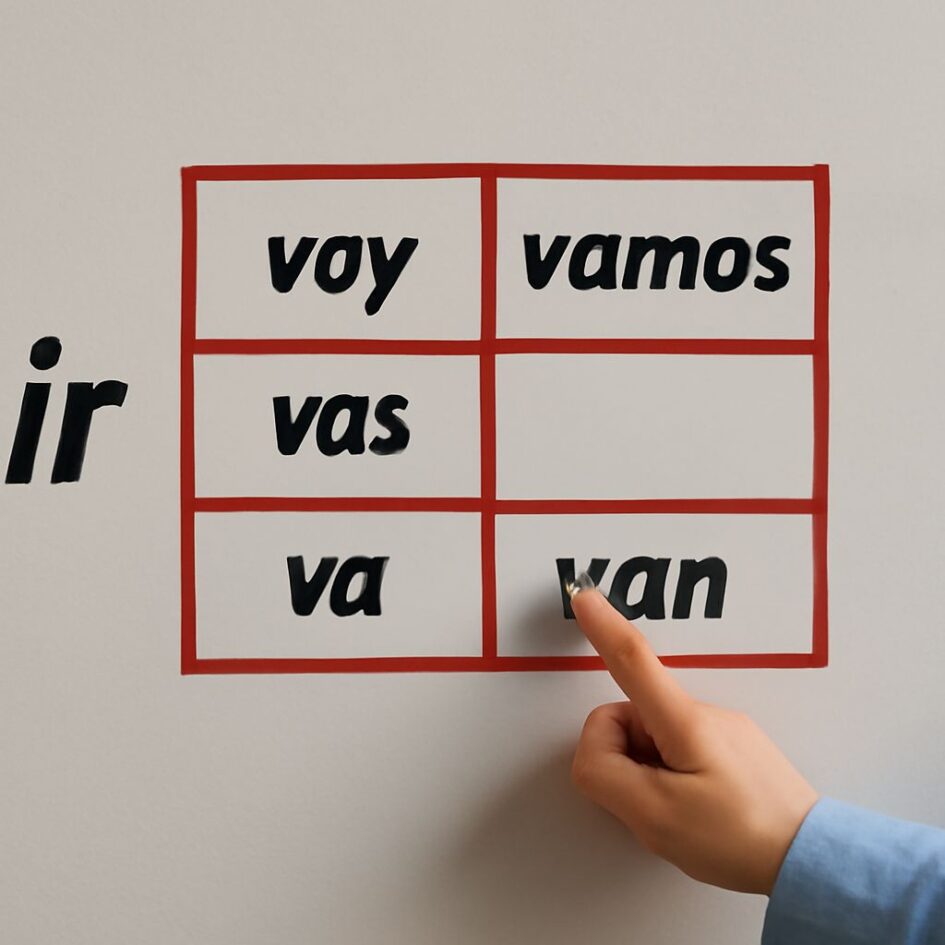
Mastering the conjugation of -ir verbs is essential for anyone learning French or Spanish. These verbs are a core component of both languages, offering a range of expressions and communication tools. Understanding how to properly conjugate these verbs allows for more nuanced and precise conversation. This guide will walk through the essentials of -ir verb conjugation in both French and Spanish, focusing on patterns, common mistakes, and tips for effective learning.
Understanding French -ir verbs
In the French language, -ir verbs form one of the three main verb groups, alongside -er and -re verbs. This group includes verbs like finir (to finish), choisir (to choose), and réussir (to succeed). Recognizing the root or stem of these verbs is key to proper conjugation. Generally, the root remains constant, with specific endings added to indicate the verb tense and subject.
Conjugation patterns of French -ir verbs
French -ir verbs generally follow a regular conjugation pattern. For present tense, the endings are:
- Je: -is (e.g., je finis)
- Tu: -is (e.g., tu finis)
- Il/Elle: -it (e.g., il finit)
- Nous: -issons (e.g., nous finissons)
- Vous: -issez (e.g., vous finissez)
- Ils/Elles: -issent (e.g., elles finissent)
These endings are consistent across regular -ir verbs, but be aware of irregular verbs that may deviate from this pattern, such as offrir (to offer) and venir (to come), which require specific study.
Exploring -ir ending verbs in Spanish
In Spanish, -ir verbs are also a prominent verb group, similar to -ar and -er verbs. Common examples include vivir (to live), escribir (to write), and abrir (to open). Like French, the root of the verb is generally consistent while the endings change based on tense and subject.
For present tense conjugation, the regular -ir verb endings are as follows:
- Yo: -o (e.g., yo vivo)
- Tú: -es (e.g., tú vives)
- Él/Ella/Usted: -e (e.g., él vive)
- Nosotros/Nosotras: -imos (e.g., nosotros vivimos)
- Vosotros/Vosotras: -ís (e.g., vosotros vivís)
- Ellos/Ellas/Ustedes: -en (e.g., ellos viven)
Spanish also features irregularities, but these patterns provide a reliable foundation for most regular -ir ending verbs in Spanish.
Common mistakes and tips for mastering -ir verb conjugation
One common mistake learners make with -ir verbs in both languages is neglecting irregular verb forms, leading to incorrect conjugations. Regular practice and exposure to verb use in context can aid in internalizing these exceptions. Additionally, pay attention to the subject-verb agreement and consistent practice with both written and spoken exercises to reinforce memory.
Helpful tips for mastering -ir verbs include using flashcards, language apps, or practice sheets focusing on conjugation patterns. Listening to native speakers and reading texts in the target language can also provide practical examples of how -ir verbs are used in different contexts. Aim to use these verbs in practical conversations to solidify your grasp of the language.