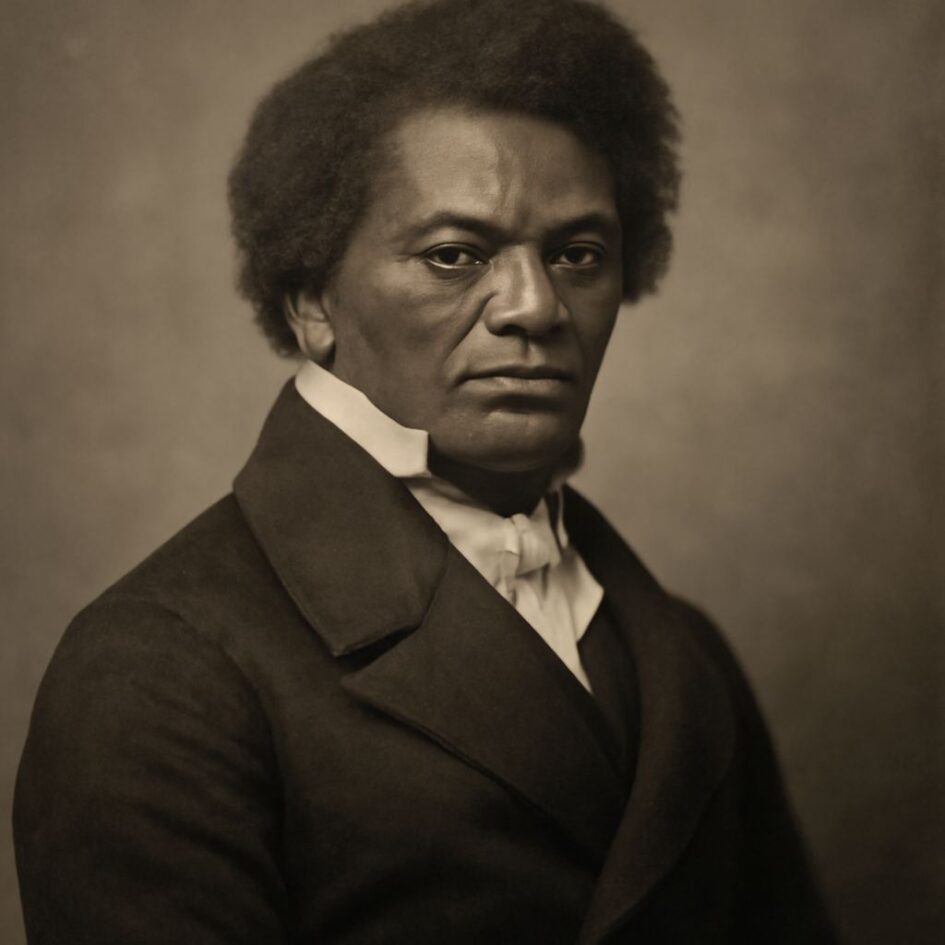
Frederick Douglass learned to read and write through a mix of early instruction, determined self-teaching, and constant improvisation under slavery. His literacy was not a simple school story; it was an achievement won against deliberate restrictions meant to keep enslaved people powerless.
The story of Frederick Douglass learning to read shows how one child’s access to letters opened the path to his later work as a writer, speaker, and abolitionist. It also shows why slaveholders tried to prevent literacy in the first place: reading could expose the injustice of slavery and give an enslaved person a public voice.
Early lessons and the ban on teaching
Douglass’s first lessons came from Sophia Auld, the wife of Hugh Auld, while he was still a child in Baltimore. She began teaching him the alphabet and some basic reading, treating him with a kindness that was unusual in his experience. Those early lessons mattered because they gave him the key that made later learning possible.
The lessons ended when Hugh Auld objected. He made the logic of slavery plain by warning that teaching an enslaved person to read would make him “unmanageable.” That ban was not just about schoolwork. It was a deliberate effort to block independence, self-knowledge, and resistance.
Once formal instruction was stopped, Douglass understood that literacy itself had become a forbidden skill. The denial sharpened his desire to learn and gave him a clear sense of the power attached to reading and writing.
How Douglass kept learning in secret
Douglass continued learning by turning ordinary moments into lessons. He traded food with white boys in exchange for reading help and used the streets and docks of Baltimore as an informal classroom. He learned from spelling books, newspapers, and any printed material he could find.
He also practiced writing in secret. Douglass copied letters, traced shapes, and practiced with tools he could improvise. He used shipyard markings, scribbles, and labels as models, then tested himself by writing from memory. This was Frederick Douglass learning to read and write through persistence rather than permission.
Those methods were risky. Literacy could bring punishment if enslavers believed he was becoming too independent. Even so, Douglass kept going, because reading gave him access to ideas beyond his immediate condition. Newspapers and books helped him see slavery not as a natural order but as a system that could be named and challenged.
His learning also deepened through one especially important text: The Columbian Orator. Its speeches and debates introduced him to argument, language, and political thought. The book helped him move from private frustration to organized critique.
From literacy to authorship and public voice
Douglass’s literacy became the foundation of his abolitionist career. Reading helped him analyze slavery; writing let him tell its reality in his own words. That shift turned a denied skill into a public instrument.
His Frederick Douglass learning to read and write summary is this: early instruction opened the door, self-teaching carried him forward, and literacy gave him a voice strong enough to challenge slavery before national audiences. His later autobiographies and speeches were possible because he had learned not only how to form words, but how to use them for persuasion and witness.
By the time he became a leading abolitionist, Douglass had transformed literacy from a private achievement into public power. His books, essays, and lectures showed that reading and writing could expose injustice, shape identity, and make room for freedom.