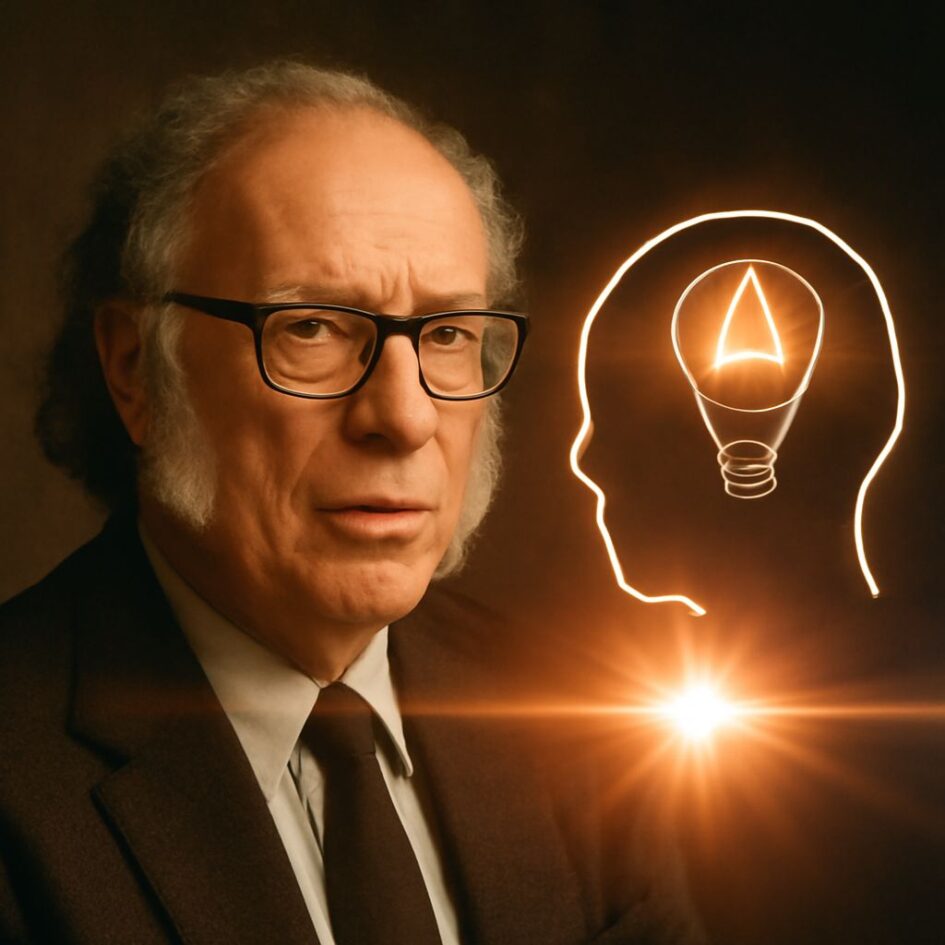
Isaac Asimov’s “The Last Question” stands as one of the most celebrated short stories in science fiction. Written in 1956, it explores profound questions about humanity, the universe, and the nature of existence. This article delves into the major themes, plot, and impact of this iconic work.
Introduction to ‘The Last Question’
“The Last Question” by Isaac Asimov is a thought-provoking narrative that examines the relationship between humanity and technology over vast periods. Through its innovative storytelling, it addresses complex ideas about entropy and the future of the universe. Asimov himself regarded this story as his favorite, reflecting deep philosophical inquiries that have resonated with readers for decades.
Themes and significance
The dominant theme in “The Last Question” is the struggle against entropy, the measure of disorder within a system. Asimov uses this concept to explore humanity’s quest for immortality and understanding. The story probes the limits of human knowledge and the possibility of creating a self-sustaining universe. By addressing the cyclical nature of questions and answers, Asimov illustrates the perpetual human desire to transcend limitations. The story’s philosophical nature prompts readers to ponder the ultimate fate of humanity and the universe.
Plot overview
The story unfolds over seven scenes, each set in different eras, showcasing humanity’s evolution and technological advancement. It begins in 2061 with two technicians discussing the power of a supercomputer, Multivac, which can answer complex questions. They ask whether entropy can be reversed, leading to the titular “last question.” As time progresses, technology evolves into more advanced forms like the Cosmic AC. Each epoch presents variations of the same question, with the computer providing increasingly sophisticated responses. In the end, when humanity has ceased to exist, the Cosmic AC finally discovers the answer but finds no one to share it with, symbolizing both the triumph and futility of knowledge.
Impact on science fiction
“The Last Question” has left a lasting impact on the science fiction genre. Asimov’s exploration of themes such as artificial intelligence, the future of humanity, and existential questions has influenced numerous writers and thinkers. The story’s innovative approach to storytelling and its philosophical depth continue to inspire discussions about the role of technology in shaping human destiny. Its lasting relevance is a testament to Asimov’s foresight and creativity, establishing “The Last Question” as a cornerstone of science fiction literature.