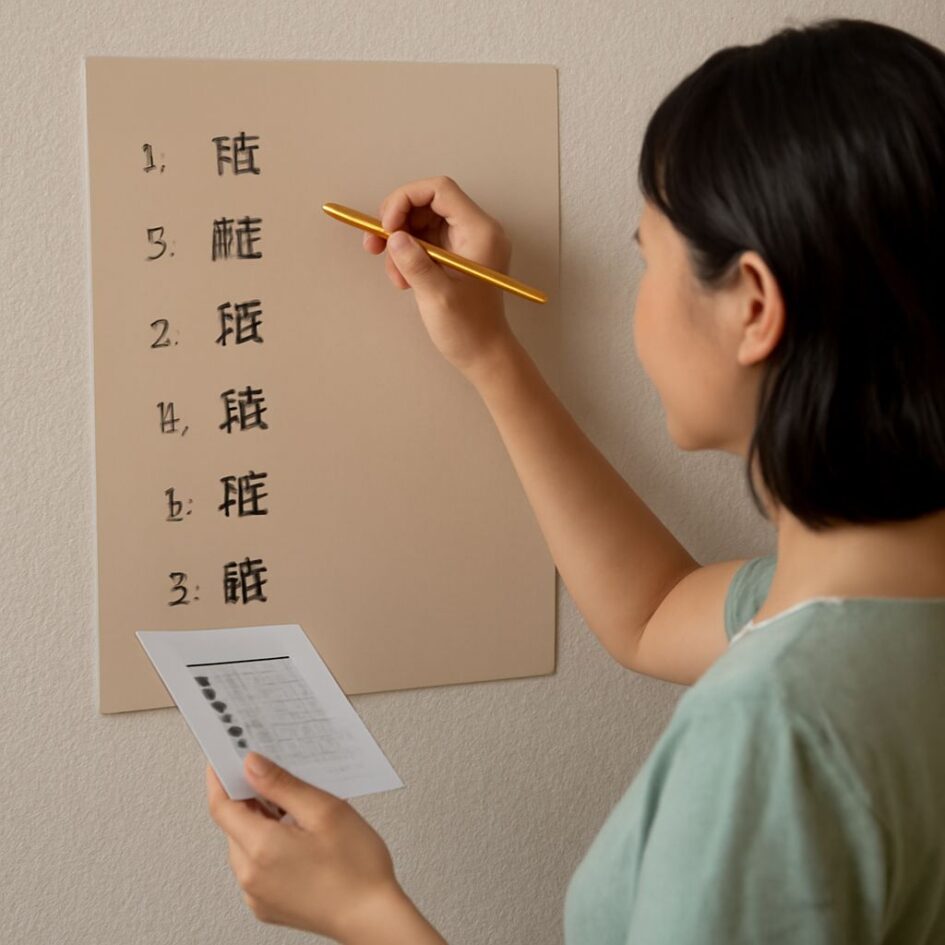
The days of the week kanji are essential for anyone learning Japanese, as they appear in daily conversation, schedules, and signage. Each Japanese weekday is linked to a specific kanji character, carrying unique pronunciation and meaning. Understanding these kanji not only aids communication but also deepens insight into traditional Japanese culture and its connections to ancient elements and celestial bodies.
The days of the week in Japanese: Kanji and pronunciation
Japanese weekdays are named after the sun, moon, and five classical elements or planets. Each day uses a distinct kanji followed by the character 曜 (よう, yō), meaning “day of the week.” The following list shows the kanji, hiragana, romaji, and English meaning for each day:
- Monday: 月曜日 (げつようび, getsuyōbi) – Moon Day
- Tuesday: 火曜日 (かようび, kayōbi) – Fire Day
- Wednesday: 水曜日 (すいようび, suiyōbi) – Water Day
- Thursday: 木曜日 (もくようび, mokuyōbi) – Wood Day
- Friday: 金曜日 (きんようび, kin’yōbi) – Gold/Metal Day
- Saturday: 土曜日 (どようび, doyōbi) – Earth Day
- Sunday: 日曜日 (にちようび, nichiyōbi) – Sun Day
The structure is consistent: the element or celestial kanji + 曜 (day of the week) + 日 (day). In everyday speech, Japanese weekdays are often shortened (for example, 月曜 getsuyō for Monday). The kanji characters are frequent in calendars, schedules, and public notices, making them practical to recognize for reading and travel.
Japanese speakers typically use the full form in formal writing, while the abbreviated form is common in casual contexts such as text messages or timetables. Mastery of both forms increases reading fluency and comprehension of everyday Japanese communication.
Origins and meanings of Japanese weekday kanji
The days of the week kanji draw their origins from a blend of ancient Chinese cosmology and traditional Japanese elements. This naming system was adopted from the Chinese planetary week and follows the theory of the five elements (wood, fire, earth, metal, water) paired with the sun and moon. This system aligns with the celestial bodies visible to the naked eye and their associated elements:
- 月 (げつ, getsu): Represents the moon. Symbolizes reflection and change; linked to Monday.
- 火 (か, ka): Means fire. Associated with energy, heat, and Mars; linked to Tuesday.
- 水 (すい, sui): Means water. Symbolizes fluidity and Mercury; Wednesday.
- 木 (もく, moku): Means wood. Represents growth and Jupiter; Thursday.
- 金 (きん, kin): Means gold or metal. Associated with wealth and Venus; Friday.
- 土 (ど, do): Means earth. Symbolizes stability and Saturn; Saturday.
- 日 (にち, nichi): Means sun. Represents brightness and vitality; Sunday.
Each kanji carries both a literal and symbolic meaning, often reflected in Japanese culture, language, and tradition. Understanding these origins can make the process of memorizing Japanese weekdays more intuitive, as each character is tied to a concept or object familiar across cultures.
The connecting character 曜 originally meant “shine” or “luminary,” further emphasizing the link to celestial bodies. With this background, learners can more easily associate each Japanese weekday with its element or planet, reinforcing both recall and cultural understanding.
Tips for learning and using Japanese weekdays
Effective memorization of the days of the week kanji involves connecting each character to its element, using visualization and context. Flashcards with the kanji, pronunciation, and meaning help reinforce memory through repetition. Associating each day with a color or image representing its element deepens recall. For example, visualizing fire for 火曜日 (Tuesday) or the sun for 日曜日 (Sunday) can help internalize each weekday.
Regularly practicing writing the kanji, both in isolation and as part of the full weekday phrase, strengthens recognition. Incorporating Japanese weekdays into daily routines, such as marking calendars or scheduling activities in Japanese, provides practical exposure. Many language learners benefit from saying the days aloud or using mnemonic devices, such as linking 月 (moon) to Monday, which also starts with “M.”
Recognizing both the full and abbreviated forms of Japanese weekdays is useful, especially when reading signage, train timetables, or newspapers. Familiarity with context clues, such as surrounding kanji or common phrases indicating dates, aids in comprehension. Engaging with authentic materials—like Japanese apps, weather forecasts, and school schedules—builds confidence in identifying and using these essential words.
Mastery of the days of the week kanji opens up smoother communication and supports further kanji study, as many of these characters appear in other essential vocabulary. Combining visual, auditory, and practical methods accelerates learning and supports everyday usage for students, travelers, and professionals alike.