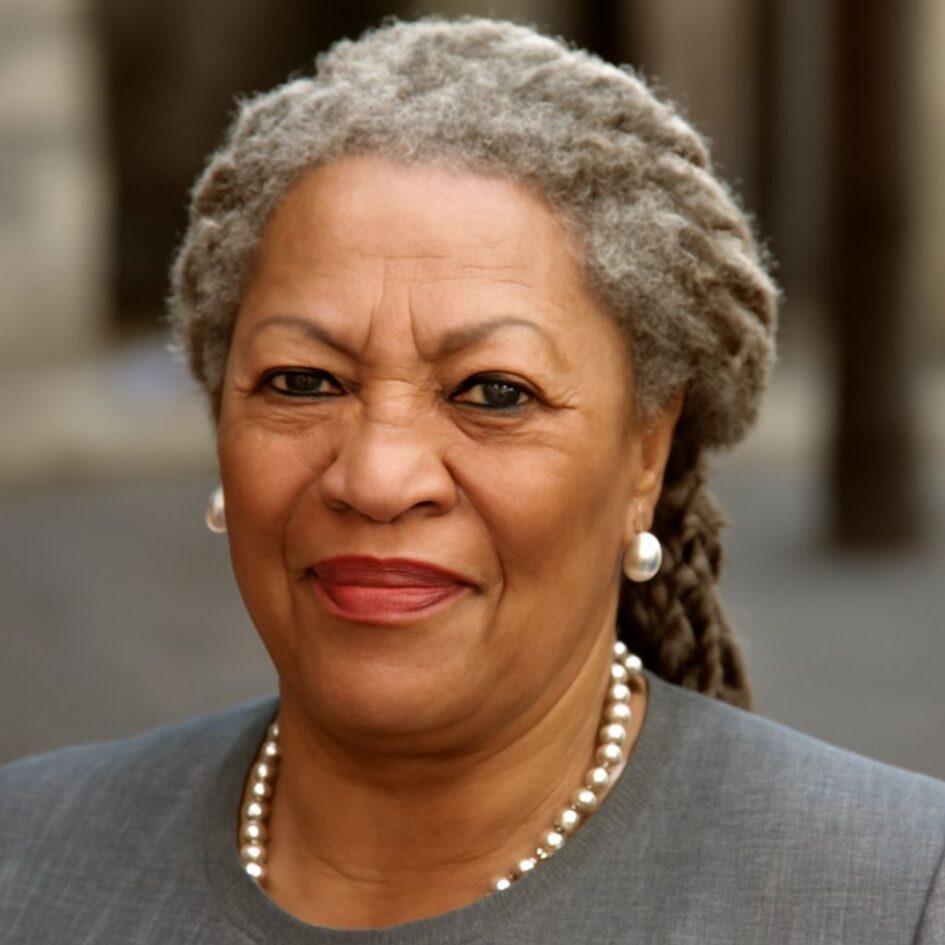
In 1970, a Random House editor published her first novel while raising two sons and working full time. The book was The Bluest Eye, and its author would become one of the most influential American writers of her generation. Morrison’s life story includes far more than a sequence of literary prizes: it also reveals how a teacher and editor helped change whose stories could reach readers.
Toni Morrison Biography: From Ohio to the Literary World
Born Chloe Ardelia Wofford in Lorain, Ohio, in 1931, Morrison grew up in a working-class Black family. Stories, music, and family conversation were part of her early life, as was an awareness of racism in the United States. Lorain was a northern industrial town, but its location did not place it outside the country’s racial divisions.
A Toni Morrison biography can trace the steps from that Ohio childhood to international recognition, but the dates alone do not explain the work. Her fiction examines how families and communities carry history, and how people learn to see themselves through stories told by others. The novels make room for beauty and humor as well as violence and loss.
She attended Howard University in Washington, D.C., a historically Black university, and earned a bachelor’s degree in English in 1953. At Cornell University, she completed a master’s degree in 1955. Morrison’s academic work included a thesis on William Faulkner and Virginia Woolf, writers whose treatment of memory and time offers a useful point of comparison with her own later experiments.
A Teacher and Editor Before a Nobel Laureate
For Toni Morrison, education led first to teaching at Texas Southern University and then at Howard. The experience placed her in classrooms before she was known to a wide public as a novelist. Her work as a teacher would continue alongside and after her publishing career.
After leaving Howard, Morrison joined Random House as an editor. She moved from textbook work to trade publishing in New York, where she became a senior editor. The position gave her influence over which manuscripts were developed and promoted within a major publishing house. She worked with writers including Gayl Jones, whose novel Corregidora appeared in 1975.
Morrison’s editorial career matters because the choice to publish a book is also a choice about whose experiences enter the public record. Editing could not by itself correct the exclusions of an industry, but it could help individual writers reach an audience and give their work sustained attention. Her novels and her work on other people’s manuscripts were distinct contributions to a broader literary culture.
Toni Morrison’s education also had a long afterlife in her teaching. She joined the Princeton University faculty in 1989 and taught creative writing and African American studies. There she founded the Princeton Atelier, which brought students together with working artists from different disciplines. The program treated art as something made through practice and collaboration, not simply studied after the fact.
The Novels and the Questions They Ask
The Bluest Eye centers on Pecola Breedlove, a Black girl who longs for blue eyes in a society that treats whiteness as a standard of beauty. The novel does not present prejudice as a single insult easily overcome. It shows how a damaging ideal can move through advertising, family life, and a community’s judgments until a child turns it against herself.
Morrison uses shifting perspectives to keep Pecola’s story from becoming a simple lesson. The structure also asks what it means for a community to witness suffering without being able to prevent it. Its subject can be painful, but its careful attention to voice makes the novel a strong introduction to her methods.
Sula (1973) follows a friendship between two women in a Black Ohio community. Its interest lies partly in the distance between a person’s complicated life and the reputation the community assigns her. Song of Solomon (1977) follows Milkman Dead as a search connected to family inheritance becomes a search into family history. Both books take community seriously without pretending that belonging is always comfortable.
Morrison’s life and work are related, but her characters should not be treated as disguised versions of their author. Ohio appears in her own history and in several books; that shared setting does not make a fictional event a record of something she personally experienced. The distinction allows readers to appreciate both the research and the imagination involved in the novels.
History, Memory, and Beloved
Published in 1987, Beloved follows Sethe, a formerly enslaved woman, and the family living with the consequences of slavery. The novel draws on the history of Margaret Garner, who escaped slavery and killed her daughter rather than allow the child to be returned to enslavement. Morrison transformed that history into fiction, creating characters and a narrative that should not be mistaken for a documentary account of Garner’s life.
The book’s haunting makes the past feel present without reducing it to a neat explanation. Memories arrive in fragments; the reader gradually learns what the characters already struggle to live with. Morrison gives historical violence a human scale while showing that its effects extend beyond one person or one generation.
Beloved won the Pulitzer Prize for Fiction in 1988. In 1993, Morrison received the Nobel Prize in Literature, becoming the first Black woman to receive that award. Those honors brought more readers to her work, though the novels’ force comes from their particular choices of language, structure, and perspective rather than from the prizes attached to them.
A Wider Cultural Legacy
Toni Morrison’s biography includes essays, lectures, children’s books, and work for the stage as well as novels. In Playing in the Dark (1992), she examined the presence of Blackness in American literature, inviting readers to question assumptions about whose perspective is treated as universal. That critical work offers a companion to the fiction: both ask readers to notice how stories shape what a culture can see.
The story of Morrison’s life also includes the institutions in which she worked: universities, publishing houses, and the communities that read and debated her books. Her influence is visible in the writers she edited, the students she taught, and the conversations her fiction continues to provoke. She died in 2019, leaving a body of work that rewards attention to individual sentences as much as to its large historical themes.
A biography of Toni Morrison can provide a useful map, but the novels give readers the fullest encounter with her art. Start with The Bluest Eye, then explore the author chronology from the society devoted to her work for a documented guide to the life and publications behind the books.