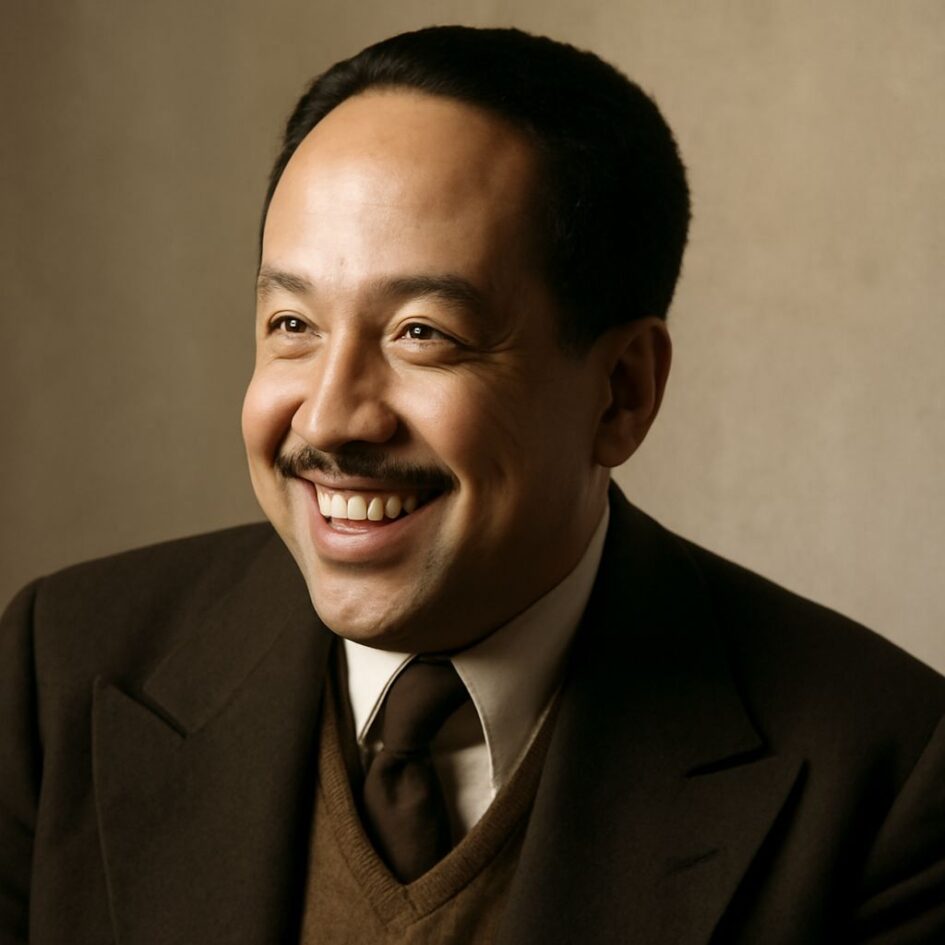
How did Langston Hughes become a central voice of the Harlem Renaissance? He brought the rhythms of Black American music, the speech of ordinary people, and a commitment to racial justice into poems, fiction, journalism, and theater. His work treated Black life as a subject rich enough for humor, grief, beauty, argument, and history.
The story begins far from Harlem, with a childhood shaped by family stories and moves across the Midwest. Hughes’s achievements grew over a career that reached readers through books, newspapers, performances, and collaborations. His best-known poems are an inviting introduction, but they represent only part of what he wrote.
Langston Hughes accomplishments across genres
Hughes published his first poetry collection, The Weary Blues, in 1926 and continued to write until his death in 1967. His body of work includes novels, plays, essays, children’s books, autobiography, and newspaper columns. He also edited collections that helped bring the work of other Black writers to readers.
Among the essential facts about Langston Hughes is that he worked across forms rather than treating poetry as a separate career. His poems drew on blues and jazz; his fictional character Jesse B. Semple, known as Simple, spoke in newspaper columns about daily life and politics. Those forms reached different audiences while sharing an interest in Black experience and public speech.
A short Langston Hughes biography can identify titles and dates, but the connections matter just as much. Travel widened his encounters with Black communities beyond the United States. Music gave him structures for repetition and voice. Journalism let him return to an audience over time, responding to social conditions through a character as well as through his own essays.
Childhood, family, and a developing writer
Hughes was born in Joplin, Missouri, on February 1. The Academy of American Poets gives the year as 1901, citing research published in 2018; many older accounts give 1902. The Library of Congress acknowledges both dates. That discrepancy is worth preserving when comparing biographical sources.
For Langston Hughes, childhood meant time with his maternal grandmother, Mary Langston, in Lawrence, Kansas, and later moves to live with his mother and stepfather. The family eventually settled in Cleveland, where he attended high school. The Academy’s account describes his grandmother’s role in raising him and the later move east through Illinois to Ohio.
Family history gave Langston Hughes as a child a connection to earlier struggles for freedom. His grandmother had lived through a period shaped by slavery, abolition, and Reconstruction. It would be too simple to attribute a whole literary career to a single influence, but those stories belong to the background of a writer who returned repeatedly to collective memory and racial injustice.
For Langston Hughes, background also included a childhood of changing homes and communities. That experience did not produce one fixed picture of Black America. In his later work, characters and speakers differ in class, place, ambition, and temperament. The variety is part of the achievement: an ordinary conversation or a remembered voice can carry social history. A Langston Hughes bio that begins in Harlem misses these earlier settings.
“The Negro Speaks of Rivers” and early recognition
Hughes’s early poem “The Negro Speaks of Rivers” links its speaker to rivers and long histories across Africa and the Americas. It appeared in The Crisis in 1921, while Hughes was still young. The poem’s first-person voice reaches across generations; its speaker is a literary creation, not a literal claim that its author personally witnessed every event named.
The poem offers a useful entry into the poet’s early interests: he was thinking about Black history on a scale larger than the immediate experiences of segregation in the United States. Its images connect place and memory without making the poem a textbook. Readers can hear its repeated phrasing before looking up the historical references that interest them.
Hughes attended Columbia University in New York for a period, then traveled and worked in a range of jobs, including at sea. His encounters with Harlem and with places abroad contributed to the breadth of his writing. He later studied at Lincoln University in Pennsylvania, graduating in 1929, according to the Academy’s biography.
The Harlem Renaissance and the sound of the blues
The Harlem Renaissance was a flowering of Black artistic and intellectual work, with New York’s Harlem as an important center and connections extending beyond one neighborhood. Hughes was among its major figures, but the movement included writers, musicians, artists, publishers, and debates about what Black art could be.
In his 1926 essay “The Negro Artist and the Racial Mountain”, Hughes argued for artistic freedom grounded in Black life rather than in the need to satisfy white expectations. The essay is a useful companion to the poems because it shows him making an argument in his own critical voice.
The title poem of The Weary Blues brings a blues performer into verse. Rather than simply mentioning music, Hughes uses repetition and changes of voice to create an encounter between a listener and a musician. The Library of Congress identifies the 1926 collection as a landmark in his career. Its sound and subject helped show how Black popular culture could shape literary form.
To understand Langston Hughes, accomplishments should be read alongside the risks and debates of his time. Black artists faced racism in publishing and public life, and they did not all agree on how literature should represent their communities. Hughes’s attention to working people and vernacular speech was an artistic choice as well as a cultural argument.
Fiction, journalism, and autobiography
What did Langston Hughes write beyond poems? His novel Not Without Laughter appeared in 1930, and The Ways of White Folks, a collection of stories, followed in 1934. In fiction he could give social tensions room to develop through scenes, relationships, and dialogue rather than through the compression of a short lyric.
His newspaper writing introduced readers to Simple, a character whose conversations could be funny, observant, and sharply political. Simple is not a transparent stand-in for the writer: the character’s judgments and the exchanges around them are part of the craft. Through a recurring voice, Hughes could address public issues in a form suited to the rhythms of a column.
For an account of his early life in his own prose, The Big Sea appeared in 1940. It is an autobiography, shaped by a writer selecting and arranging memories, and it can be read alongside the historical records in a biography of Langston Hughes. The Yale Beinecke Library’s Hughes papers offer another path into his correspondence and creative life.
Where to begin reading
Start with “The Negro Speaks of Rivers,” then read the essay “The Negro Artist and the Racial Mountain” for Hughes’s own argument about art. Continue with The Weary Blues to hear his use of musical form, and try The Big Sea or a collection of Simple stories for his prose. The Library of Congress recording of Hughes reading in 1959 adds his voice to the page. These facts about Langston Hughes become more meaningful when the works themselves show how he made history, music, and conversation into literature.