How did a woman known around the world for refusing to surrender a bus seat become an organizer for civil rights? Rosa Parks grew up in Alabama amid family support, segregation, and racial violence. Her childhood and early years were followed by decades of organizing, making her 1955 arrest one chapter in a much longer public life.
That chapter mattered because people around her were ready to act together. Neighbors walked, organized rides, raised money, and challenged discriminatory laws. Understanding Parks’s upbringing and the community work she did as an adult helps explain both her individual courage and the collective effort that changed Montgomery’s buses.
Rosa Parks childhood: family and education
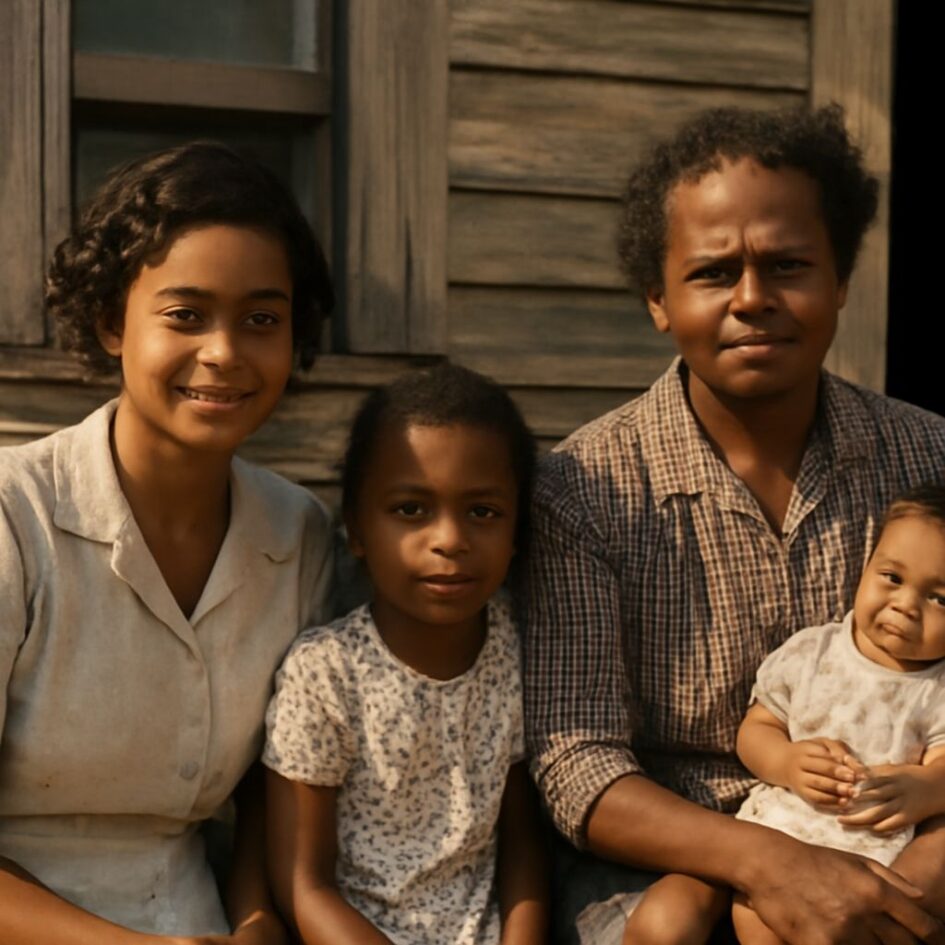
Born Rosa Louise McCauley in Tuskegee, Alabama, on February 4, 1913, she moved as a young child to Pine Level. There she lived with her mother, brother, and maternal grandparents. The Library of Congress timeline traces the move and her later education in Montgomery; its collection of her papers includes her own account of growing up on her grandparents’ farm.
What was Rosa Parks childhood like? Family and schooling offered support in a society structured by racial separation and threatened by violence. The National Park Service describes her early years on the farm and her awareness of Ku Klux Klan activity. These were not distant events in a history book: they formed part of the world a Black child had to understand while growing up in the South.
Parks attended the Montgomery Industrial School and later left school to help care for family members. Her formal education was interrupted, but it was not abandoned. After marrying Raymond Parks in 1932, she received her high school diploma in 1933. The Detroit Historical Society notes Raymond’s encouragement in that return to study.
For Rosa Parks, early life combined the protections of family with the restrictions imposed by segregation. Neither detail alone explains the adult she became. Together, they place her later choices in a community and a historical setting.
Organizing before the bus boycott
Raymond was involved in efforts to support the Scottsboro defendants, young Black men whose case became a national civil rights cause. Parks also became involved in that work. In 1943, she was selected as secretary of the Montgomery branch of the NAACP, according to the Library of Congress. The role involved sustained attention to meetings, records, and the concerns brought to the organization.
For Rosa Parks, background and experience in organizing included work with young people as well as adults. The library’s timeline records her service as an adviser to the Montgomery NAACP Youth Council in 1949. In August 1955 she attended a workshop at Tennessee’s Highlander Folk School, where participants examined problems of segregation and organizing. These experiences connected her with other people already working for change.
For Rosa Parks, adulthood brought the patient work of listening, keeping records, helping young people, and building relationships long before her most famous protest. Such work is less easily captured in a single photograph than a moment of arrest, but it helps explain the network that surrounded her.
A refusal and a community response
On December 1, 1955, a Montgomery bus driver ordered Parks and other Black passengers to give up seats for a white passenger. She refused and was arrested. She was 42 and already an experienced activist. The NAACP’s account records her own rejection of the familiar claim that physical exhaustion alone explains her decision.
The response was collective. The Women’s Political Council and other local organizers called for a bus boycott beginning on December 5, the day of her trial. Black residents walked, shared cars, and found other transportation. Churches and community organizations supported a protest that continued for more than a year. The car pools required drivers, dispatchers, meeting places, and money for fuel; the daily logistics turned a call for protest into a sustained community undertaking. Parks took part in organizing, while the Montgomery Improvement Association helped coordinate the wider effort.
Legal action followed more than one route. Parks’s own case was separate from Browder v. Gayle, the federal case brought by Aurelia Browder, Claudette Colvin, Susie McDonald, and Mary Louise Smith. The Supreme Court Historical Society identifies the plaintiffs and explains the case. After the federal ruling against bus segregation was upheld, Montgomery’s buses were desegregated in December 1956 and the boycott ended.
A Rosa Parks summary that names only the bus seat misses the costs of that period. Parks lost her department-store job in 1956, and she and her family faced financial strain. The protest’s outcome rested on the choices of thousands of people who kept participating despite hardship and intimidation.
Detroit and a continuing public life
In 1957, Parks moved with her family to Detroit. There she continued to take part in civil rights work and, beginning in 1965, worked in the office of Congressman John Conyers Jr. A Harvard oral history resource documents her work as a receptionist and administrative aide and provides a route to an interview about her life.
A Rosa Parks bio can follow this later chapter through community work, public appearances, and efforts to support younger generations. The Rosa and Raymond Parks Institute for Self Development, founded in 1987 with Elaine Steele, connected her name to education and youth development. Her public recognition also grew: she received the Presidential Medal of Freedom in 1996 and the Congressional Gold Medal in 1999, as the NAACP records.
The biography of Rosa Parks ends with her death in Detroit on October 24, 2005, at age 92. The influence of her work continues in the documents she left, the people she helped, and the collective campaigns in which she participated. Her papers preserve notes and accounts that allow readers to look beyond a familiar image and hear more of her own perspective.
A longer view of achievement
For Rosa Parks, achievements in the Montgomery boycott grew from years of NAACP service and continued alongside her later work with young people. For Rosa Parks, life as an activist joined an individual decision to years of relationships and organized effort. Reading that longer history shows how lasting change can grow from both a public act and the steady work that makes collective action possible.