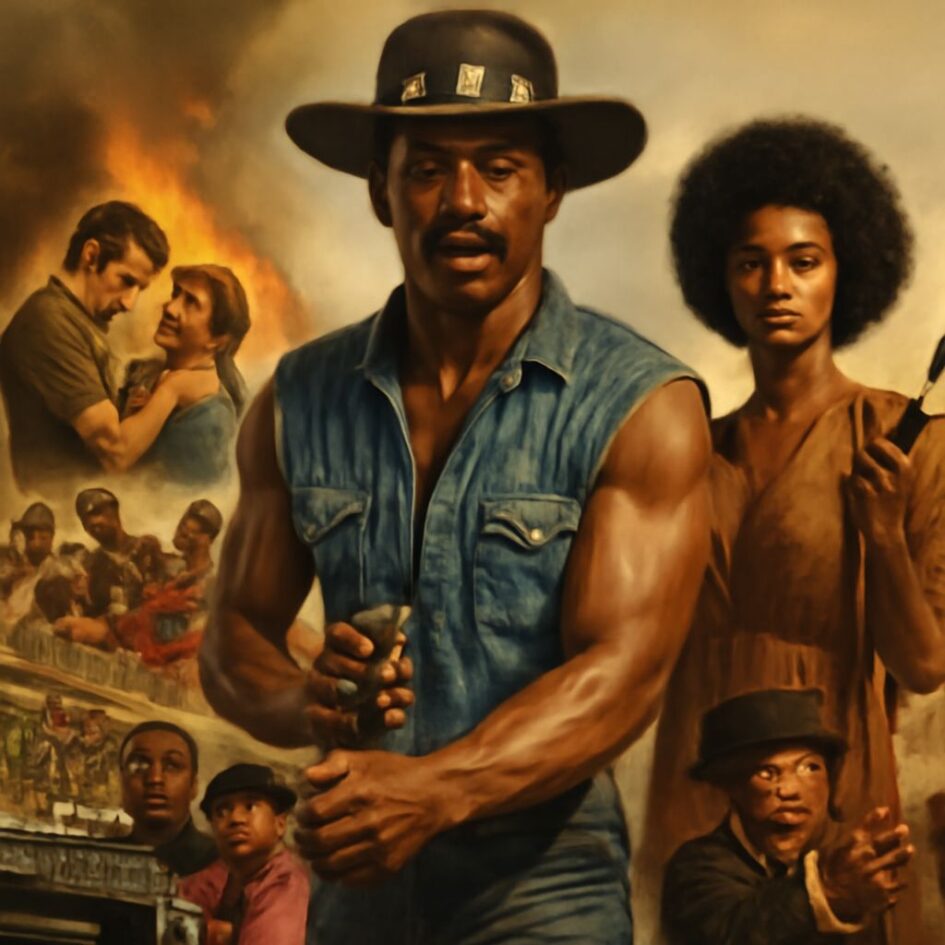
It is tempting to think that every film called blaxploitation tells the same story of crime and revenge. A list of blaxploitation films quickly unsettles that idea: private eyes, independent fugitives, nurses and vampires move through the period’s pictures. Their differences matter as much as the label they share.
The performers in blaxploitation films also worked within different systems of power. Some appeared in independent productions; others became the faces of studio releases sold to Black audiences. Credits and stories reveal the choices behind familiar titles.
A name with a history
Blaxploitation is a critical and commercial label associated with a surge of Black-centered American films in the early 1970s. It joins “Black” and “exploitation,” a term for low-budget filmmaking marketed around sensational attractions. The label can describe a market as well as an argument: these films created visible opportunities for Black performers and filmmakers, while critics challenged the repeated images of drugs, violence and criminal life.
A blaxploitation movies list is most revealing when it keeps both sides in view. Film scholar Amy Abugo Ongiri connects the studio market for films such as Shaft to interest in Black audiences and Blackness after the civil rights movement. That commercial setting does not settle the meaning of an individual film. A guide to blaxploitation films can make those production choices visible: independent financing and studio backing gave filmmakers different kinds of control.
No single set of movies labeled blaxploitation can stand for every Black film of the decade. The term is debated because it gathers independent and studio work, different genres and conflicting political ideas under one name. The selections below use it as a doorway into that debate, with credits attached so the people behind the images remain visible.
Films that changed the frame
1. Sweet Sweetback’s Baadasssss Song (1971). Melvin Van Peebles wrote, directed and stars in this independently made film about a man fleeing police after intervening in a beating. Fractured editing gives the chase a defiant rhythm. The Criterion Collection’s account places Van Peebles’s production in its political and industrial context. Include it in a list of films from the blaxploitation era to see how independent control could shape both form and message.
2. Shaft (1971). Gordon Parks directed Richard Roundtree as John Shaft, a New York private detective hired to find a kidnapped young woman. Isaac Hayes’s score and Roundtree’s confident presence helped make the character a lasting screen figure. Criterion’s film record identifies the principal credits and setting. City streets give Shaft room to move between rival groups. In a selection of films labeled blaxploitation, this studio detective story offers a contrast with the independent chase made by Van Peebles.
3. Super Fly (1972). Directed by Gordon Parks Jr. and starring Ron O’Neal as cocaine dealer Youngblood Priest, the film follows a man seeking one last deal before leaving the trade. Curtis Mayfield’s songs can be heard alongside the film’s glamorous surfaces as a commentary on the damage of the drug economy. The Library of Congress essay on the soundtrack notes both the music’s social commentary and objections from civil rights organizations. A blaxploitation movies list needs this tension: style and criticism can occupy the same picture.
4. Coffy (1973). Written and directed by Jack Hill, the film stars Pam Grier as a nurse pursuing the people she holds responsible for her younger sister’s addiction. AFI’s catalog records the credits and the film’s Los Angeles setting. Grier gives the revenge story a center of anger and calculation; the film also uses sexualized violence as part of its appeal. A selection of blaxploitation movies gains range by considering both the power of that performance and the terms on which it was sold.
Blaxploitation actors and the roles they shaped
Roundtree’s Shaft carries himself with ease; Grier’s Coffy moves through a corrupt network in disguise. These blaxploitation actors are worth watching as performers making choices within genre formulas, not simply as symbols of an era.
The careers of actors in blaxploitation also crossed genre lines. Black actors in these blaxploitation pictures moved among studios, independent productions and different genres. Grier appeared in Coffy and in Scream Blacula Scream, as AFI’s filmography shows. Comparing the roles reveals how blaxploitation’s actors could anchor very different stories; Grier moves from a nurse seeking revenge to a spiritual practitioner confronting a vampire. A viewer following a blaxploitation film list can trace those changes across pictures instead of treating each appearance as a copy of the last.
Other blaxploitation actors gave supporting roles their own force. Casting matters behind the leading role, too. Supporting actors in these blaxploitation productions give a neighborhood, a workplace or a criminal network its particular texture. In Shaft, the investigation depends on relationships and negotiation. Those details help a list of blaxploitation movies become a way to examine how communities were represented, as well as how stars were promoted.
When the monster enters the picture
5. Blacula (1972). William Crain directed William Marshall as Mamuwalde, an African prince cursed by Dracula after seeking his help against slavery. In modern Los Angeles, the vampire’s search for a woman who resembles his lost wife gives the story a tragic current. AFI’s record supplies the credits and describes the film’s production and reception. This is blaxploitation horror with a recognizable Gothic frame and a history of enslavement placed at its beginning.
Among horror films of blaxploitation, this one gives its monster a tragic bearing. Marshall’s measured voice lends him dignity even as the story shows his victims’ fear. That balance is one reason horror in blaxploitation deserves attention alongside the crime pictures: the supernatural plot can carry grief and desire as well as shocks. AFI also records contemporary disagreement over Marshall’s role, a reminder that audiences did not respond with one voice.
6. Scream Blacula Scream (1973). Bob Kelljan directed the sequel, with Marshall returning as Mamuwalde and Grier playing Lisa Fortier. In AFI’s account, Lisa’s ritual offers the vampire a possible escape from his curse. The film places spiritual practice inside a sensational plot, so its portrayal is worth considering as representation rather than taking it as an account of a living tradition.
These horror films within blaxploitation also make the monster a central character. The two vampire films show how blaxploitation’s horror stories adapted familiar screen monsters for new casts and settings. Marshall ties the pair together while Grier changes the balance of the sequel. A list of movies from the blaxploitation period that includes both films can show how a sequel shifts its monster’s relationships and stakes. For a blaxploitation movies list, the sequel makes comparison possible rather than merely adding another title.
Choose the next screening
Choose the next film by the contrast that interests you most: independent and studio production, crime and supernatural danger, or two performances by the same star.