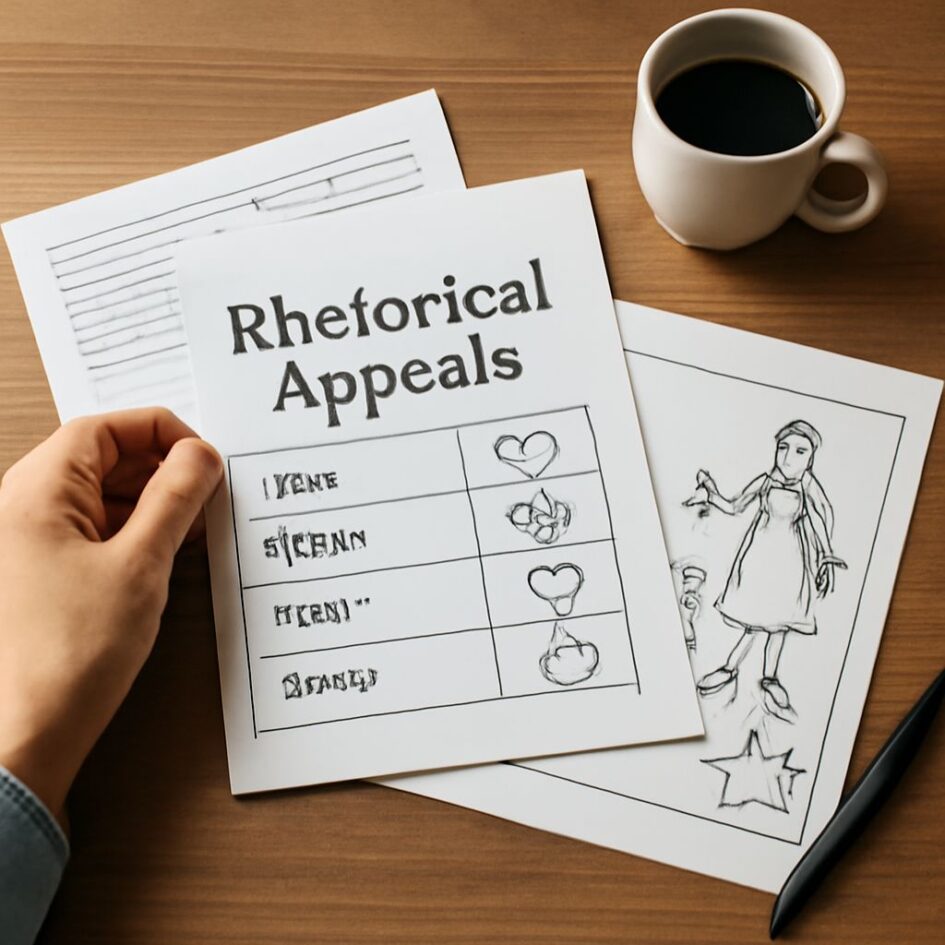
A kairos appeal persuades by fitting a message to its moment, audience, and circumstances. Kairos is not merely urgency and not simply a fourth item to memorize beside ethos, pathos, and logos. It is the judgment that a particular claim, tone, proof, and call to action suit what people need or can act on now.
The four appeals work as a system. The mnemonic “logos ethos pathos kairos” organizes the labels, but effective persuasion depends on their interaction: a credible speaker may need evidence, emotional meaning, and timely delivery.
Ethos, pathos, and logos in brief
- Ethos establishes trust through character, expertise, fairness, or a demonstrated record. A licensed engineer discussing bridge safety, for example, draws on ethos.
- Pathos engages emotions and values such as compassion, fear, hope, pride, or belonging. A personal account can make an abstract issue immediate.
- Logos uses reasons and evidence: data, examples, definitions, comparisons, and cause-and-effect relationships. It helps an audience test a claim.
- Kairos concerns fit: the right message, channel, and moment, when the audience is prepared or compelled to respond.
Kairos appeal: What timing and situation add
Kairos adds a situational test to the other appeals. Ethos asks whether the source is trustworthy, pathos whether the message matters emotionally, and logos whether the reasoning holds. Kairos asks whether those choices fit this audience now. A sound argument can fail when delivered too early, too late, or through a channel people are not using.
The claim “The city should conserve water” changes with context. During a severe drought, a short alert can lead with current reservoir data, a clear household action, and immediate stakes. In a normal rainy season, the same claim may need long-term cost evidence and an explanation from water officials to persuade residents or a city council.
Audience changes the fit as well. Residents may need practical instructions tied to daily routines; council members may need projections, legal detail, and budget effects. Kairos therefore shapes selection and emphasis rather than replacing the other appeals.
How logos, ethos, pathos, and kairos work together
Suppose a city asks residents to restrict lawn watering during a heatwave. The water manager’s experience and transparent disclosure of limits provide ethos. Reservoir levels and projected demand provide logos. A story about keeping water available for hospitals or vulnerable neighbors adds pathos. The heatwave, falling reserves, and immediate restriction deadline create kairos.
For a public meeting, the same campaign might use charts and cost comparisons; a mobile alert might use one urgent instruction and a link to details. The claim stays related, but wording, proof, and delivery change with audience and moment. Trust makes evidence credible, evidence disciplines emotion, and kairos determines what leads.
Types of persuasive techniques: Choosing the right appeal
Choosing among broader persuasive techniques starts with the audience’s obstacle:
- Low trust: use ethos through relevant credentials, independent testimony, transparent limits, and specific examples of past performance.
- Low understanding: use logos through definitions, comparisons, contextualized statistics, and a clear chain of causes and effects.
- Low personal investment: use pathos through human consequences, accurate stories, shared values, or a concrete benefit.
- Limited attention or a narrow window: use kairos to select the channel, timing, length, and call to action. Put the time-sensitive point first.
Most messages combine these choices. A campaign can establish the source, prove the claim, show why it matters, and ask for timely action. The best persuasive technique fits the audience’s barrier and the moment, rather than the appeal that appears first in a memorized list.