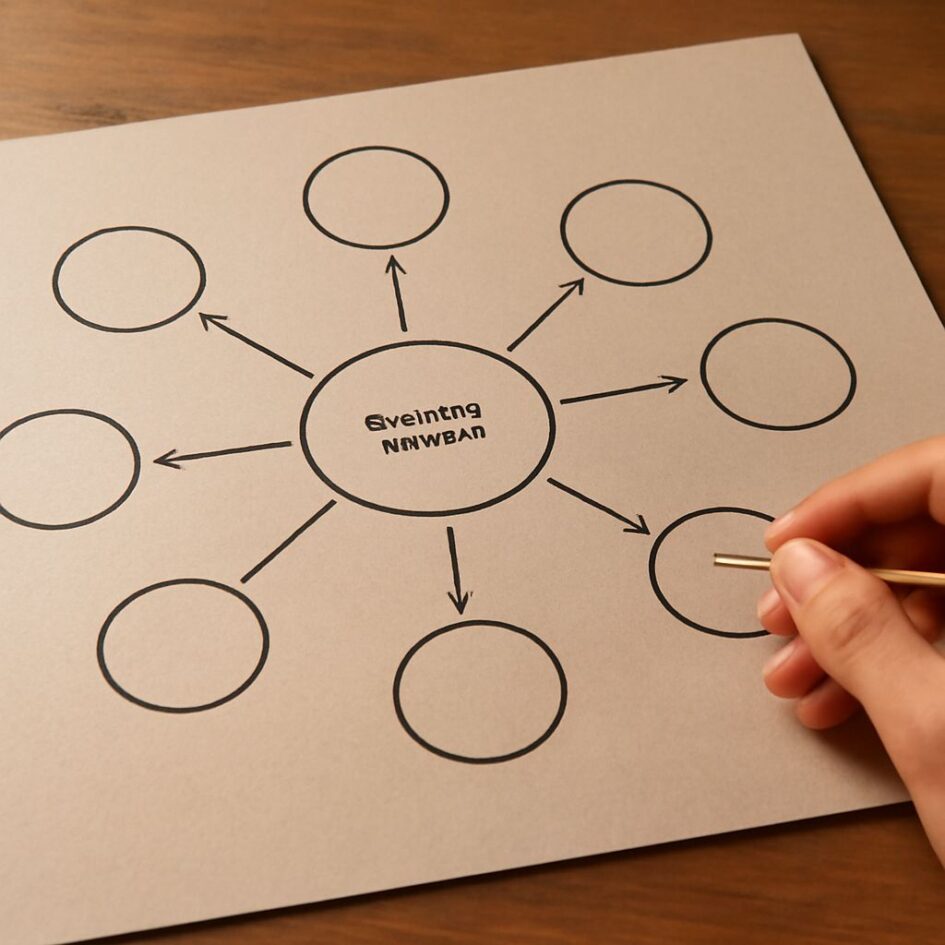
Ecomaps are valuable tools in social work, used to visualize the relationships and interactions between a client and their environment. By mapping out these connections, social workers can gain a deeper understanding of the various social, familial, and community factors impacting their clients. This article will explore what ecomaps are, their role in social work, real-world examples, and how to create effective ecomaps.
What is an ecomap?
An ecomap is a graphical representation that displays the social and personal relationships of an individual within their environment. It is typically depicted as a drawing with the client at the center, surrounded by circles representing different connections like family, friends, work, and community services. Lines are drawn between the client and these entities to indicate the nature and strength of these relationships. For instance, a solid line may signify a strong, positive relationship, while a dashed line could represent a weaker or more stressful interaction.
The role of ecomaps in social work
Ecomaps serve multiple roles in social work, primarily by providing a clear visual summary of a client’s social context. They help social workers identify both supportive networks and stressors in a client’s life. By understanding these dynamics, social workers can tailor their interventions to strengthen positive connections and address negative influences. Ecomaps are particularly useful in identifying areas where additional resources or support services might be needed to improve the client’s overall well-being.
Real-world ecomap examples
Real-world applications of ecomaps in social work demonstrate their practicality. For example, consider a single mother who is struggling to balance work and childcare. An ecomap might reveal a strong supportive relationship with her parents, who provide occasional childcare, but highlight a stressful relationship with her employer due to inflexible working hours. Another example could involve a teenager facing academic challenges. The ecomap might show strong connections with peers but weak ties with educational staff, suggesting a potential area for intervention to enhance school support.
Creating an effective ecomap
Creating an effective ecomap involves several steps. First, start by placing the client at the center of the map. Next, identify key people and institutions in the client’s life, such as family members, friends, schools, workplaces, and community organizations. Draw these entities around the client, using circles to represent them. Use lines to connect the client to these entities, varying the types and thicknesses of lines to reflect the nature of each relationship. Solid lines might denote strong, supportive connections, while dotted lines could indicate stress or conflict. Finally, review the ecomap with the client to ensure it accurately represents their social context and discuss any insights or areas for intervention it may reveal.