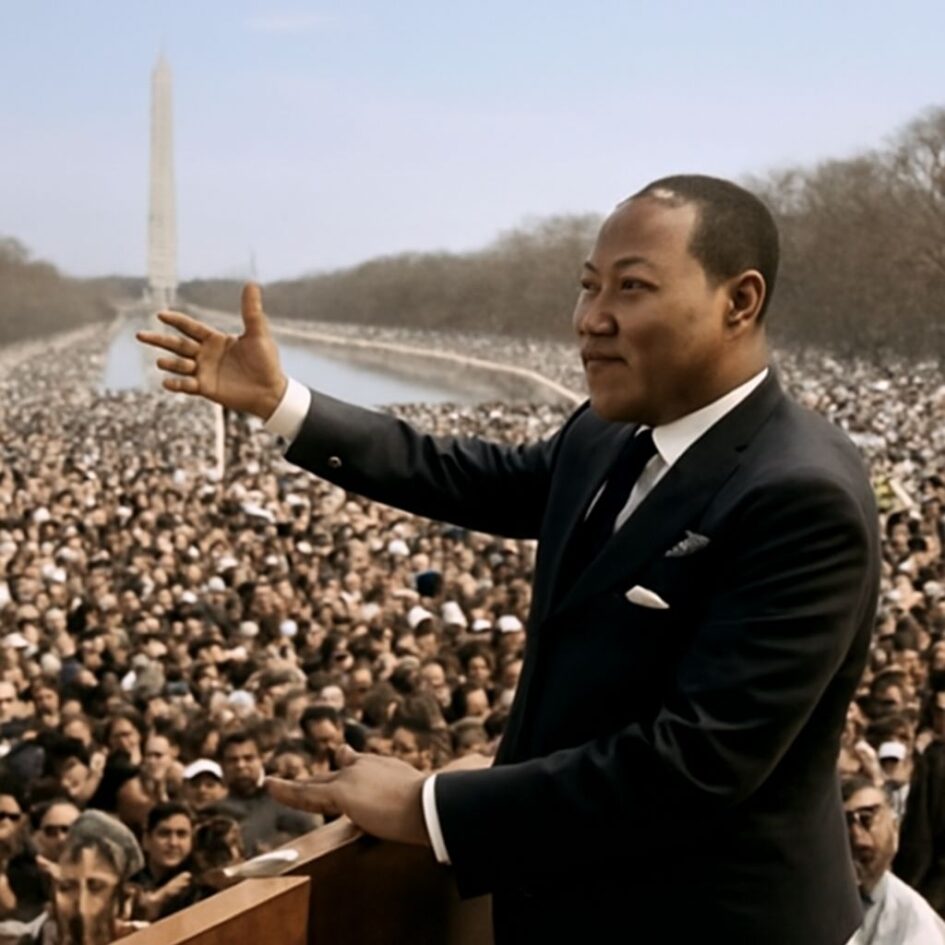
This i have a dream rhetorical analysis explains how Martin Luther King Jr. combines repetition, allusion, metaphor, contrast, and shared American ideals to create moral authority, urgency, rhythm, and a collective vision. The speech moves from the nation’s failure to its possible future.
King’s strategy is both confrontational and hopeful. He exposes the broken promise of racial equality, then gives the audience language for demanding that promise immediately.
I Have a Dream rhetorical analysis: audience, occasion, and purpose
King delivered the speech on August 28, 1963, at the March on Washington for Jobs and Freedom. His immediate audience included civil rights demonstrators, federal leaders, journalists, and millions of people listening across the United States. The speech therefore had to pressure government while persuading a divided national audience.
Its purpose was to connect civil rights to American law, Christianity, and democratic identity. King argues that freedom cannot remain a constitutional promise or a delayed reform. The phrase “the fierce urgency of now” turns injustice into an immediate moral crisis. This approach builds ethos: King speaks as a religious leader and citizen defending principles the nation already claims to honor.
I Have a Dream speech rhetorical analysis: repetition and rhythmic momentum
Repetition gives the speech its memorable structure and emotional force. The anaphora “I have a dream” introduces a series of imagined conditions in which racial justice becomes visible in specific places, including “the red hills of Georgia” and “the state of Mississippi.” Each repetition adds another image and expands the dream from a personal hope into a national demand.
Other repeated phrases create urgency. “Now is the time” rejects gradualism, while “Let freedom ring” builds a rising musical pattern through a list of American locations. In an i have a dream speech rhetorical analysis, these refrains matter because they help listeners anticipate, remember, and join the language. The rhythm turns a political argument into a shared public performance.
I Have a Dream speech rhetorical devices: allusion, metaphor, and national ideals
King’s allusions place civil rights within familiar moral traditions. “Five score years ago” echoes the opening of Abraham Lincoln’s Gettysburg Address and links the march to the unfinished work of emancipation. References to the Declaration of Independence and the Bible similarly present equality as both a founding principle and a sacred obligation.
Metaphor makes institutional injustice concrete. The nation has given Black citizens “a bad check,” a promise marked “insufficient funds.” This image translates abstract constitutional failure into a recognizable financial betrayal. Later, biblical language such as “justice roll down like waters” gives the movement spiritual authority and suggests that justice should become powerful, continuous, and impossible to contain.
How contrast and shared values shape the speech’s effect
Contrast clarifies the distance between American ideals and lived reality. King places “the quicksands of racial injustice” against “the solid rock of brotherhood,” and present oppression against the future condition in which children are judged “not by the color of their skin but by the content of their character.” These oppositions make the argument easy to follow while giving it emotional direction.
Appeals to shared values also broaden the audience. King does not frame equality as a benefit for one group alone; he presents freedom as necessary to fulfill the nation’s identity. The closing refrain, “Free at last,” joins biblical cadence with political liberation. As a result, the speech leaves listeners with more than evidence of injustice: it provides a memorable standard against which American conduct can be measured.