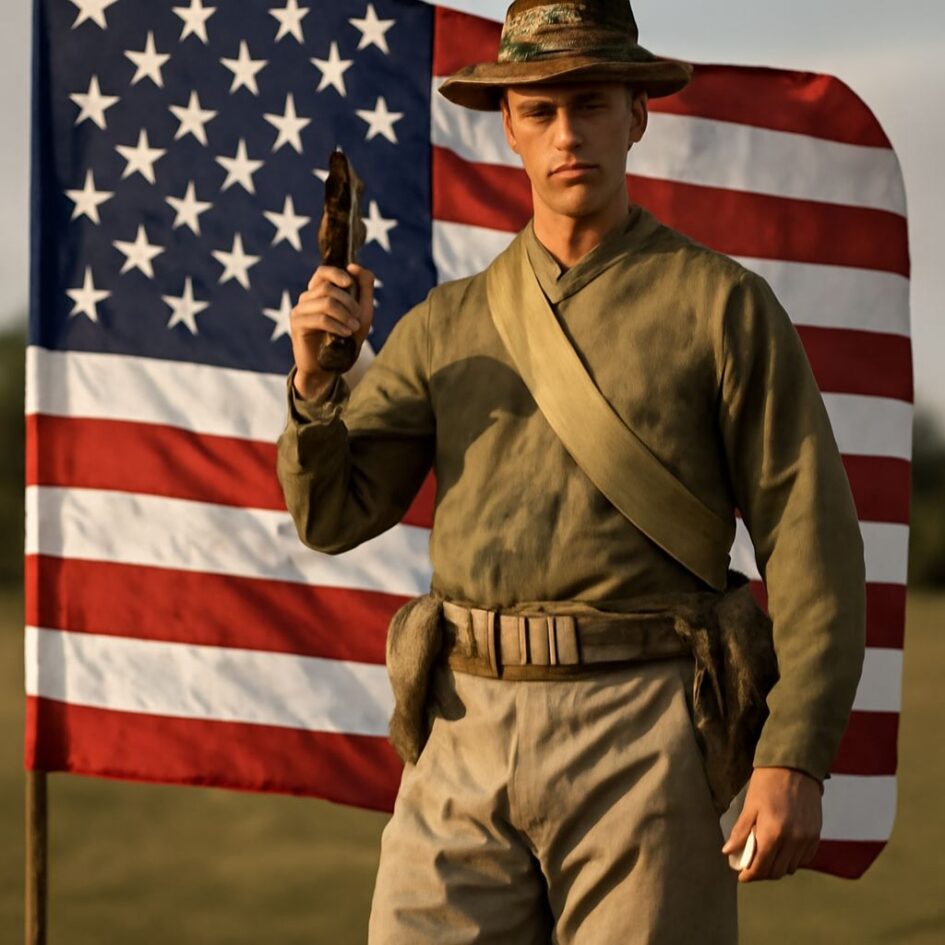
American propaganda in World War I had four principal communication goals: recruit soldiers, raise money, increase production and conservation, and maintain public unity behind the war. It also framed Germany as a dangerous enemy and encouraged civilians to treat everyday choices as military contributions.
The campaign combined government publicity with commercial design and voluntary organizations. Posters were its most visible form, but newspapers, films, pamphlets, speeches, postcards, and public rallies carried the same appeals to different home-front audiences.
Who produced American World War I propaganda, and why?
The Committee on Public Information (CPI), created in April 1917 and led by George Creel, coordinated much of the federal message. Its Division of Pictorial Publicity commissioned and distributed posters, while the News Division supplied material to newspapers. The Four Minute Men delivered short patriotic talks in theaters and public venues.
Other agencies addressed specific behaviors. The War Department and military branches promoted enlistment; the Treasury Department ran Liberty Loan and War Savings campaigns; the U.S. Food Administration promoted conservation; and the Council of National Defense supported mobilization. Commercial printers, artists, newspapers, civic clubs, and organizations such as the American Red Cross extended that reach.
These institutions did not deliver one identical message. They adapted appeals to service, purchase, labor, thrift, food, and loyalty while presenting them as parts of a shared national effort.
How American propaganda in World War I urged recruitment and military service
Recruitment posters presented enlistment as duty, adventure, masculinity, or protection of home. James Montgomery Flagg’s “I Want You for U.S. Army” made Uncle Sam point directly at the viewer, turning a national request into a personal command. Other designs showed soldiers charging forward, American flags, or families threatened by the enemy.
Verbal appeals targeted men eligible for service through honor, shame, and comradeship. Images of women and children made military service appear protective, while posters for nurses, relief workers, and wartime roles broadened women’s participation without equating it with combat enlistment. Soldiers were also urged to buy bonds and maintain morale, linking battlefield service to financial and emotional discipline.
How bonds, production, and conservation turned support into action
Liberty Bond posters asked civilians to lend money to the government. They pictured resolute soldiers, warships, national symbols, and endangered civilians, often pairing urgent commands with subscription information. The appeal made buying a bond a practical act of loyalty rather than a distant investment. War Savings Stamps offered a lower-cost entry point, including for children.
Production and conservation messages shifted responsibility into homes, farms, and workplaces. Posters encouraged food gardens, reduced use of wheat, meat, sugar, and fuel, and increased industrial output. “Food will win the war” and similar commands connected a householder’s menu or a worker’s productivity to soldiers’ supply lines. Women were addressed as household managers and consumers; workers as producers; children as gardeners, stamp buyers, and disciplined citizens.
Symbols, poster styles, and audience appeals in American propaganda during World War I
American propaganda during World War I relied on quick visual recognition. Red, white, and blue, eagles, flags, Liberty figures, Uncle Sam, and the Statue of Liberty signaled national belonging. Strong diagonals, limited color palettes, large type, and close-up faces made posters readable at a distance. Artists used direct eye contact and imperative slogans to create immediacy.
The strongest designs matched style to audience. Recruitment posters used heroic bodies and action; bond posters used soldiers’ sacrifice and national personifications; conservation posters used domestic scenes, children, gardens, and simple instructions. Newspapers and pamphlets could provide longer arguments, while films and speeches dramatized unity and enemy danger. This combination translated policy into visible habits: enlist, lend, produce, save, and support the war.