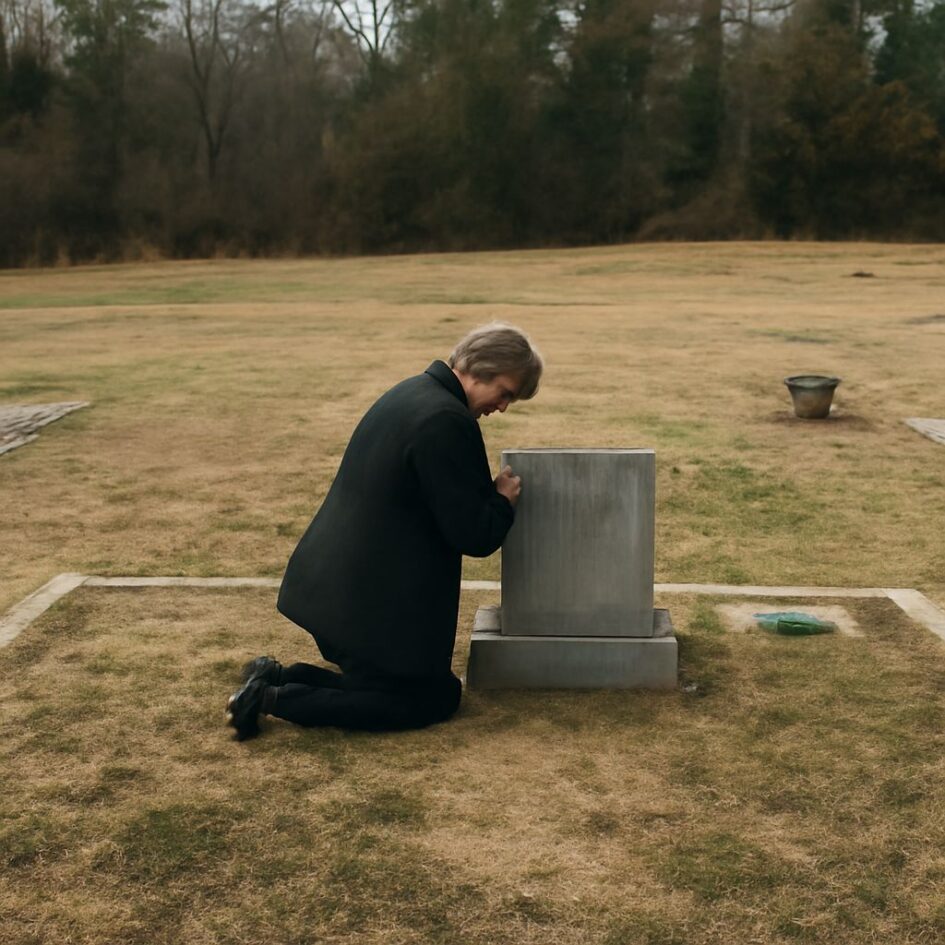
The Rosa Parks grave is in Detroit’s Woodlawn Cemetery, while the residence most often called the Rosa Parks home is 2672 S. Deacon Street. These sites represent different parts of her story: Woodlawn is her burial place, Deacon Street records her later Detroit life, and Montgomery locations relate to the years surrounding the 1955 bus boycott.
Identifying them separately prevents a museum, a private residence, and a cemetery from being treated as one address.
Rosa Parks grave: her burial at Detroit’s Woodlawn Cemetery
Rosa Parks died in Detroit on October 24, 2005. She was interred in the mausoleum at Woodlawn Cemetery. Her crypt is beside those of her husband, Raymond Parks, and her mother, Leona McCauley. The cemetery therefore serves both as a family resting place and as a major memorial setting.
The marker is not in Montgomery and is separate from the Rosa Parks Museum. Woodlawn identifies where Parks was laid to rest; the museum interprets her activism and arrest. Visitors looking for the grave should follow cemetery guidance to the mausoleum, not a museum address.
Rosa Parks home: the Detroit residence and its history
After leaving Montgomery for Detroit in 1957, Parks lived at more than one Detroit address. The residence most closely associated with her later Detroit years is 2672 S. Deacon Street, a modest house on the city’s west side. It was a private home, not a public attraction. Its significance comes from the life conducted there: Parks worked for U.S. Representative John Conyers, remained active in civic causes, and continued living in Detroit after becoming a national civil-rights figure.
The Deacon Street address was not the site of the 1955 bus incident. Parks was arrested in Montgomery before moving north. The Detroit house belongs to the next chapter of her biography—her work, family life, and continuing public role. That timeline distinguishes it from other residences returned by broad searches.
Rosa Parks house: why the surviving Detroit home became a site of public memory
The surviving Rosa Parks house became a site of public memory because it makes her history tangible at domestic scale. A bus, courthouse, or museum can represent the movement; a small house shows where a celebrated person lived after the event that made her famous. Its ordinary rooms and working-class setting connect public biography with everyday life.
Preservation has also shaped the house’s story. When the Deacon Street property faced deterioration and possible demolition, Parks’s niece Rhea McCauley acquired it in 2016 to save it. The structure was later moved to Berlin with artist Ryan Mendoza’s involvement. References may therefore use “Detroit home” for the original address and “Berlin” for a later display location. They describe one surviving structure, not two different homes.
Other residences and memorial sites often confused with the Detroit home
Searches also return places that belong on a separate map. Parks’s Montgomery residence or residences are tied to her life before Detroit and the boycott, but they are not 2672 S. Deacon Street. The Rosa Parks Museum in Montgomery occupies the former Montgomery Fair building and focuses on the arrest, boycott, and movement history; it is a museum, not her home or grave.
The Henry Ford Museum in Dearborn displays the bus associated with Parks’s arrest. That vehicle is a preserved artifact, not a residence. Sites connected with Parks’s childhood in Pine Level, Alabama, likewise mark an earlier part of her biography. For location searches, the practical division is Woodlawn Cemetery for burial, Deacon Street for the principal Detroit home, and Montgomery for the boycott-era story.